Content Feed

Discover interesting content about books and writing

Classic Continuation Jan 18, 12:49 PM

The Testimony of the Ice: A Lost Chapter from Walton's Journal

The Testimony of the Ice: A Lost Chapter from Walton's Journal

Creative continuation of a classic

This is an artistic fantasy inspired by «Frankenstein; or, The Modern Prometheus» by Mary Wollstonecraft Shelley. How might the story have continued if the author had decided to extend it?

Original excerpt

He sprung from the cabin-window, as he said this, upon the ice-raft which lay close to the vessel. He was soon borne away by the waves, and lost in darkness and distance.

— Mary Wollstonecraft Shelley, «Frankenstein; or, The Modern Prometheus»

Continuation

September 17th, 17—

I had thought my narrative complete when the creature departed upon his raft of ice, diminishing into that white and boundless expanse until he was but a speck against the endless pallor of the Arctic wastes. Yet Providence, in her inscrutable wisdom, has granted me one final chapter to record—a chapter which, though it chills my blood to transcribe, must be committed to paper lest my sister believe me mad when at last I return to England's shores.

Three days hence did we continue our southward journey, the men considerably restored in spirits now that the spectre of mutiny had passed and our course turned homeward. The ice had loosened its grip upon our vessel, and though progress remained arduous, we moved steadily through channels of dark water that wound between the frozen monuments of that desolate region. I spent my hours in contemplation of all that had transpired—of Victor Frankenstein's terrible confession, of the daemon born of unholy science, and of the profound questions their existence had awakened within my breast.

It was upon the evening of the third day that young Hopkins, our most keen-eyed sailor, called down from his watch with a voice trembling between fear and bewilderment.

"Captain Walton! There is something upon the ice—a figure, sir, and it moves not!"

My heart, which I had believed hardened against further shocks, commenced a violent palpitation within my chest. I seized my glass and ascended to the deck, where the crew had gathered in uneasy congregation. Through the lens I perceived what Hopkins had descried: a dark form sprawled upon a vast plate of ice some quarter mile distant. Even at such remove, I recognized the terrible proportions, the unnatural limbs extended in attitudes of final exhaustion.

The creature.

"We shall investigate," I announced, though every fibre of my being recoiled from the prospect. The men exchanged glances of profound reluctance, yet none dared contradict their captain. We lowered the small boat and four of us—myself, Hopkins, the surgeon MacTavish, and stalwart Peterson—rowed through the frigid waters toward that dreadful tableau.

As we approached, I perceived that my initial assessment had been correct. The being lay upon its back, those yellow eyes—which had so haunted my dreams since first I beheld them in the cabin where Frankenstein's corpse reposed—now staring sightlessly at the perpetual twilight of the northern sky. The countenance, if such it could be called, bore an expression I had not thought possible upon those hideous features: peace.

MacTavish, whose scientific temperament had drawn him to accompany us despite his terror, knelt beside the form with professional detachment.

"He is dead, Captain," the surgeon pronounced after his examination. "Some hours at least, perhaps longer. The cold preserves, but I should estimate he expired not long after we last observed him departing upon the ice."

"The funeral pile," I murmured, recalling the creature's final declaration. "He spoke of ascending his funeral pile and exulting in the agony of the torturing flames."

"There are no flames here, sir," Hopkins observed, his voice barely above a whisper. "Only the ice. The endless, merciless ice."

I contemplated the scene before me with emotions I found impossible to categorize. Here lay the author of such misery, the destroyer of the Frankenstein lineage, the murderer of innocent William, of dear Clerval, of the gentle Elizabeth. By every measure of justice, I should have felt satisfaction at his demise—relief that such a terror had been removed from the world of men.

Yet as I gazed upon that massive form, I found myself remembering not his crimes but his words—those eloquent, agonized declarations of loneliness that had issued from his lips as he stood over his creator's deathbed. I recalled his account of the blind De Lacey, of his desperate hope for acceptance, of the progressive destruction of his better nature by the relentless persecution of humanity. Was this not, in some terrible sense, as much victim as villain?

"What shall we do with it, Captain?" Peterson inquired, unconsciously employing the pronoun that denied the creature's personhood.

I considered the question at length. To bring the body aboard would invite superstitious terror among the crew—men already strained to the limits of their endurance. Yet to leave it here, exposed to the elements and the eventual curiosity of whatever explorers might follow our path, seemed equally impossible. The world was not prepared to know what Victor Frankenstein had wrought.

"We shall commit him to the deep," I declared at last. "As we would any sailor who perishes far from home."

MacTavish's eyebrows rose in evident surprise. "A Christian burial, Captain? For such a... being?"

"Not Christian, perhaps," I acknowledged. "But humane. Whatever else he was, he possessed a soul capable of suffering—and of reflection upon that suffering. That alone, I think, entitles him to some small dignity in death."

With considerable effort, we maneuvered the enormous form to the edge of the ice plate. I removed from my pocket the small prayer book I carried always upon my person—a gift from you, dear Margaret, given upon my departure—and read aloud such passages as seemed appropriate to the occasion. The men stood in uncomfortable silence, their heads bowed more from habit than conviction.

"We therefore commit his body to the deep," I concluded, adapting the familiar words, "to be turned into corruption, looking for the resurrection of the body when the Sea shall give up her dead."

We pushed, and the creature slid from the ice into the black waters below. For a moment he floated, those terrible features just visible beneath the surface, and then slowly, inevitably, he descended into the Arctic depths—into that cold darkness from which no man, nor any creation of man, shall ever return.

The men rowed back to the ship in silence. I remained at the stern, watching the spot where the creature had vanished until it was indistinguishable from the surrounding ice and water. My thoughts turned to Victor Frankenstein, to his warnings and his anguish, and I wondered whether his tormented spirit—if such things persist beyond the grave—might now find some measure of peace knowing that his creation had at last found its ending.

That night, alone in my cabin, I took up my pen to record these events. The candle guttered in the cold draft that found its way through every seam of our vessel, casting dancing shadows upon the walls. I thought of the creature's expressed intention to destroy himself upon a funeral pyre—to let the flames consume him until his remains "would afford no light to any curious and unhallowed wretch who would create such another." Perhaps the Arctic deep would serve that same purpose; certainly no natural philosophy could retrieve a body from such unfathomable depths.

And yet, as I write these words, I find myself troubled by a question that permits no easy answer. The creature had spoken of his desire to die, of his intention to seek out the most northern extremity of the globe and there end his miserable existence. But he had also spoken of the necessity of fire—of the complete destruction of his physical form lest another might follow Frankenstein's terrible example.

The sea preserves what fire would destroy.

I shake off such morbid fancies. The creature is dead; of this MacTavish is certain, and I trust his medical judgment. Whatever secrets lay encoded in that unnatural flesh, they are now buried beneath fathoms of frozen water, beyond the reach of any future investigator. The tale of Victor Frankenstein and his daemon shall remain known only to myself and, through these letters, to you, dear Margaret—a cautionary fable of ambition overreaching the bounds of wisdom, of science transgressing against nature, of the terrible consequences that attend the creation of life without the acceptance of responsibility for that creation.

September 19th, 17—

We have made considerable progress southward. The ice continues to relent before us, and the men speak now of home, of families waiting, of warm hearths and English soil. Their spirits have recovered remarkably from the travails of recent weeks, though I notice that none venture to speak of what we witnessed, what we buried in the Arctic waters. Perhaps they believe it all a fever dream induced by cold and privation. I shall not disabuse them of this comfortable fiction.

For myself, I find that my ambitions have undergone a profound transformation. That burning desire for glory which had driven me to these frozen extremities now seems the foolishness of youth, a vanity as dangerous in its way as Frankenstein's own overreaching aspirations. I no longer dream of discovery and renown; I dream only of your face, Margaret, and of the simple contentments of domestic life. Let others seek the pole; I shall seek only peace.

Yet sometimes, in the dark hours before dawn, I wake from dreams I cannot quite recall—dreams in which yellow eyes regard me from the shadows, in which a voice of terrible eloquence asks questions I cannot answer. What is life? What obligations does the creator bear toward the created? Is the abandonment of one's progeny a greater sin than the act of creation itself?

I have no answers, dear sister. I possess only questions, and the profound conviction that some doors, once opened, can never be fully closed again. Victor Frankenstein opened such a door, and though he and his creation have both passed beyond the realm of mortal concern, I cannot shake the feeling that the questions they raised shall haunt humanity long after their names are forgotten.

The creature asked me, in those final moments, to record his tale—to ensure that the world might know not merely what he had done, but what had been done to him. I have honored that request within these letters, though I know not whether any shall believe the account when at last you read it. Perhaps it is better that they do not; perhaps such knowledge is too terrible to bear.

We sail southward, toward warmth, toward home, toward the forgetting that time inevitably brings. But I shall not forget. The creature's final words echo still within my memory: "I shall die, and what I now feel be no longer felt. Soon these burning miseries will be extinct." So he believed, and so it has proved. His miseries are indeed extinct, quenched by the cold embrace of Arctic waters.

But the misery of knowledge—of knowing what humanity is capable of creating, and of the terrible consequences that attend the abdication of responsibility—this, I fear, shall burn within me until my own dying day.

Your devoted brother,
R. Walton

P.S. I have sealed these letters within the strongest chest I possess, with instructions that they be delivered to you unopened should any mishap befall me before I reach England's shores. Guard them carefully, Margaret. They contain truths that the world may not be ready to receive—and warnings that future generations may desperately need to hear.

0 0
Classic Continuation Jan 17, 04:05 AM

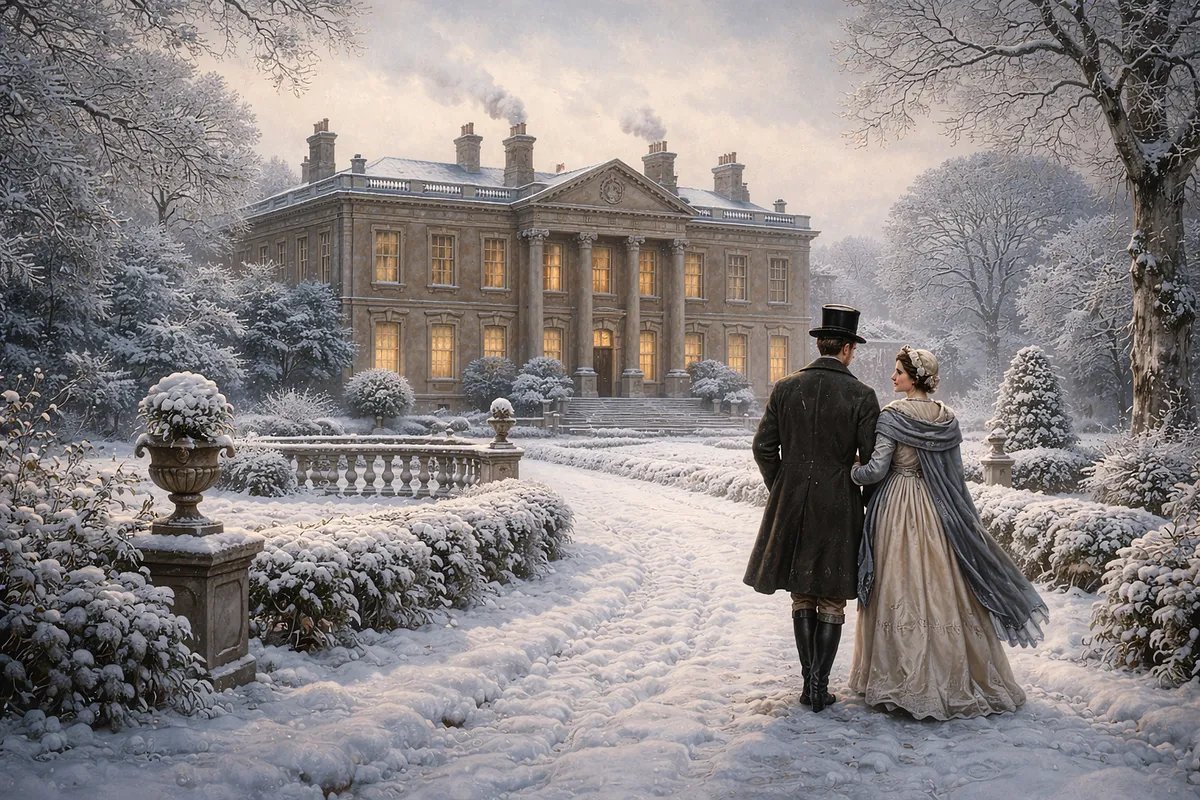
The Chapter Austen Never Wrote: Pemberley's First Winter

The Chapter Austen Never Wrote: Pemberley's First Winter

Creative continuation of a classic

This is an artistic fantasy inspired by «Pride and Prejudice» by Jane Austen. How might the story have continued if the author had decided to extend it?

Original excerpt

Happy for all her maternal feelings was the day on which Mrs. Bennet got rid of her two most deserving daughters. With what delighted pride she afterwards visited Mrs. Bingley, and talked of Mrs. Darcy, may be guessed. I wish I could say, for the sake of her family, that the accomplishment of her earnest desire in the establishment of so many of her children produced so happy an effect as to make her a sensible, amiable, well-informed woman for the rest of her life; though perhaps it was lucky for her husband, who might not have relished domestic felicity in so unusual a form, that she still was occasionally nervous and invariably silly.

— Jane Austen, «Pride and Prejudice»

Continuation

The first winter at Pemberley brought with it such a transformation of domestic felicity as Elizabeth had scarcely dared to imagine during those tumultuous months of misunderstanding and prejudice. She found herself, on a particularly crisp December morning, seated in the library—that magnificent room which had first begun to soften her heart toward its master—composing letters to her beloved sister Jane, whilst Mr. Darcy attended to correspondence of his own at the adjacent escritoire.

Their companionable silence was of that variety which speaks more eloquently of true affection than any profusion of words might accomplish. Elizabeth glanced up from her paper to observe her husband's profile, still marvelling at the extraordinary circumstances which had brought so proud a gentleman and so spirited a lady to such perfect understanding.

"You are staring, Mrs. Darcy," said he, without raising his eyes from his letter, though the corner of his mouth betrayed the slightest inclination toward a smile.

"I am merely contemplating whether your present expression indicates vexation with your correspondent or concentration upon some matter of great import," Elizabeth replied with characteristic archness. "The furrow of your brow suggests the former, yet I know you to be too well-bred to permit such feelings to manifest themselves so openly."

Darcy set down his pen and turned to face her fully. "You have found me out, I confess. I have received intelligence from Town which I fear may not be entirely agreeable to you."

"Pray, do not keep me in suspense. My imagination, left to its own devices, will conjure misfortunes far exceeding any reality."

"Your mother writes to inform us that she and your father intend to visit Pemberley for the Christmas season, accompanied by your younger sisters."

Elizabeth's countenance underwent several rapid alterations—surprise, followed by something approaching dismay, before settling into an expression of determined cheerfulness. "Well! We knew such a visitation must occur eventually. I had merely hoped... that is to say, I had imagined we might enjoy somewhat more tranquility before..."

"Before your mother could catalogue the precise value of every furnishing in Pemberley and communicate her findings to the whole of Hertfordshire?" Darcy's tone was dry, but his eyes held genuine warmth.

"Fitzwilliam! You must not—" Elizabeth began, but found herself unable to suppress a laugh. "Oh, it is very bad of you to say what I was thinking. Though I confess the prospect of Mary's moral observations upon the grandeur of our situation, combined with Kitty's raptures over the officers stationed in Lambton, does present certain challenges to my equanimity."

"Shall I compose a civil refusal? The roads are treacherous this time of year, and concern for their safety would provide adequate excuse."

Elizabeth considered this offer with more seriousness than perhaps it deserved, before shaking her head with resolution. "No, indeed. We must receive them. Papa, at least, will provide rational conversation, and I have not seen Jane since her confinement began. She writes that she is perfectly well, but I should like to judge for myself whether she merely wishes to spare me worry."

"Then Bingley and Jane shall be invited as well. I had already written to Charles proposing as much, suspecting you would wish for your sister's company."

The look Elizabeth bestowed upon her husband in that moment contained such a mixture of gratitude and affection as to occasion a softening of even his habitually reserved countenance. "You are too good," she said quietly.

"On the contrary, I am entirely selfish. Your happiness is essential to my own comfort, and your happiness requires your sister. The arithmetic is quite simple."

"Such romantic sentiment! I hardly know what to make of such effusions from Mr. Darcy of Pemberley."

"Mock me if you will, but you shall not provoke me into coldness. I have learnt, through considerable difficulty, to value warmth above dignity."

Elizabeth rose from her seat and crossed to where he sat, placing her hand upon his shoulder with easy familiarity. "The student has exceeded the teacher, I think. I intended only to teach you to be laughed at, yet you have somehow learnt to laugh at yourself—a far more valuable accomplishment."

Their tender exchange was interrupted by the entrance of Mrs. Reynolds, whose respectful knock preceded her announcement that Miss Georgiana requested an audience with her brother on a matter of some urgency.

Georgiana appeared moments later, her usually serene countenance displaying signs of considerable agitation. At nineteen, she had blossomed under Elizabeth's sisterly influence into a young woman of quiet confidence, though her natural reserve still manifested in moments of uncertainty.

"Brother, Elizabeth," she began, twisting her hands in a manner reminiscent of her former shyness, "I must speak with you both on a subject of great delicacy."

"Pray, sit down, dearest," Elizabeth said with gentle encouragement. "Whatever the matter, we shall face it together."

Georgiana settled herself upon the settee, gathering her courage visibly before speaking. "I have received a letter. From Colonel Fitzwilliam."

Darcy's expression sharpened. "Richard? What does he write?"

"He writes... that is to say, he expresses..." Georgiana paused, colour rising to her cheeks. "He has written to declare his attachment to me and to request permission to pay his addresses."

The silence which followed this announcement was profound. Elizabeth observed her husband's face with keen attention, watching as surprise gave way to consideration, and consideration to something she could not quite decipher.

"Richard," Darcy repeated slowly. "Our cousin Richard."

"I know it must seem strange," Georgiana rushed to say. "He is our cousin, and considerably older than myself, and as a younger son, his prospects are not—"

"Georgiana." Darcy's voice was firm but not unkind. "You need not catalogue Richard's deficiencies. I am well acquainted with them. What I wish to know is this: what are your feelings on the matter?"

The question appeared to surprise Georgiana, as though she had not expected it to be posed. "My feelings?"

"Yes. Do you return his attachment?"

Georgiana looked from her brother to Elizabeth, finding in her sister's countenance only encouragement. "I... I believe I do. He has been so kind to me, always. Even when—" She broke off, unable to speak of that painful episode which still shadowed her memories. "He never treated me differently afterward. He never looked at me with pity or censure. He simply remained Richard—steady and true and good."

Elizabeth reached for her husband's hand, knowing this moment required her silent support. Darcy's relationship with his cousin had always been marked by genuine affection, yet the prospect of entrusting Georgiana to any man must occasion the most careful consideration.

"Richard's circumstances are not what I had imagined for you," Darcy said at length. "As a younger son, he has only his commission and his portion. You would not live as you have been accustomed."

"I care nothing for that," Georgiana said with surprising firmness. "My fortune is sufficient for both of us, and Richard has proved his worth in ways that transcend material considerations. He is honourable, brother. Truly honourable."

Darcy was silent for a long moment. When he spoke again, his voice was gruff with emotion he could not entirely conceal. "You are much changed from the girl who could not speak her own mind. I find I am glad of it, though it means I must relinquish my role as your protector sooner than I had anticipated."

"Then... you consent?"

"I consent to his paying his addresses. The rest shall depend upon what passes between you. But Georgiana—" He rose and crossed to where she sat, taking her hands in his own. "You have my blessing, if Richard can secure your happiness. God knows he has been a better friend to me than I have often deserved."

Georgiana's eyes filled with tears as she embraced her brother, and Elizabeth found herself obliged to dab at her own eyes with her handkerchief. The scene before her—proud Mr. Darcy displaying such tender affection for his sister—confirmed what she had long suspected: that beneath his austere exterior beat a heart capable of the deepest feeling.

The weeks which followed brought the promised invasion of Bennets to Pemberley's stately halls. Mrs. Bennet's raptures upon viewing the house exceeded even Elizabeth's worst imaginings, whilst Mr. Bennet retreated to the library with a frequency which suggested he found its comforts preferable to his wife's society—a preference Elizabeth could not find it in her heart to condemn.

Jane's arrival brought with it the peculiar radiance of expectant motherhood, and the sisters found much to discuss during long afternoons before the fire. Bingley, ever amiable, proved an invaluable ally in managing the more trying elements of the family gathering, his good humour providing a buffer against Mrs. Bennet's excesses.

Colonel Fitzwilliam arrived on Christmas Eve, his usual ease somewhat diminished by the gravity of his purpose. Elizabeth watched with secret amusement as the brave soldier who had faced Napoleon's forces with unwavering courage appeared nearly undone by the prospect of a private interview with young Miss Darcy.

The interview, conducted in the music room whilst the family gathered in the drawing room, lasted above an hour. When Georgiana emerged, her face bore an expression of such luminous happiness as to render words unnecessary. Colonel Fitzwilliam followed, his own countenance displaying relief and joy in equal measure.

"I believe congratulations are in order," Elizabeth said warmly, as Darcy rose to shake his cousin's hand.

"You have secured the greatest treasure in England," Darcy told him, his voice betraying the depth of his feeling. "See that you prove worthy of her."

"I shall endeavour to do so every day of my life," Richard replied with unwonted solemnity. "She has made me the happiest of men."

Mrs. Bennet, upon learning of the engagement, declared it to be the most fortunate match of the season—a pronouncement which required considerable forbearance from all present, given that she had made identical declarations regarding the unions of both Jane and Elizabeth. Mr. Bennet merely observed that if his daughters continued to marry at such a rate, he should soon find himself related to half the nobility of England, and retreated once more to his sanctuary among the books.

As the family gathered for Christmas dinner, Elizabeth surveyed the assembly with a heart full of gratitude. Jane, blooming with health and happiness beside her devoted Bingley; Georgiana, her hand clasped in Richard's beneath the table; even Mary, Kitty, and her mother, for all their follies, represented the ties of family which she had once feared to lose in her elevation to mistress of Pemberley.

And Darcy—her Darcy—watching her from across the table with an expression which spoke of shared understanding and deep contentment.

"What are you thinking, Mrs. Darcy?" he asked later that evening, when the guests had retired and they stood alone before the great windows, watching snow fall softly upon Pemberley's grounds.

"I am thinking," Elizabeth replied, "that I was a fool to ever believe I could judge a man's character upon brief acquaintance. I am thinking that pride and prejudice are equally to be guarded against, and that happiness, when it comes, often arrives in forms we never expected."

"And are you happy?"

She turned to face him, her expression softening into something approaching reverence. "I am more happy than I have words to express. Though I shall endeavour to express it nonetheless, for I find I am become quite fond of the sound of my own voice."

Darcy laughed—that rare, genuine laugh which she had worked so diligently to earn. "Then I am content. For your voice, Elizabeth, is the sweetest music I know."

Outside, the snow continued to fall, blanketing Pemberley in winter white, whilst within, the fire crackled cheerfully and two hearts, once divided by misunderstanding, beat now in perfect harmony—a testament to the transformative power of love, honestly acknowledged and mutually bestowed.

0 0
Classic Continuation Jan 16, 10:02 PM

The Green Light Extinguished: A Lost Chapter of West Egg

Creative continuation of a classic

This is an artistic fantasy inspired by «The Great Gatsby» by F. Scott Fitzgerald. How might the story have continued if the author had decided to extend it?

Original excerpt

Gatsby believed in the green light, the orgastic future that year by year recedes before us. It eluded us then, but that's no matter—tomorrow we will run faster, stretch out our arms farther. . . . And one fine morning——So we beat on, boats against the current, borne back ceaselessly into the past.

— F. Scott Fitzgerald, «The Great Gatsby»

Continuation

I left West Egg on a morning thick with the promise of autumn, the leaves already beginning their slow surrender to colors that seemed, in their dying, more vivid than anything the summer had offered. The Buchanan house stood white and enormous across the bay, and I wondered if Tom and Daisy were at breakfast, careless as ever, letting others clean up the mess they had made of several lives.

The train carried me back toward the Middle West, and I watched Long Island recede like a dream one struggles to remember upon waking. There would be no more parties at Gatsby's mansion, no more orchestras playing through the blue gardens, no more faces drifting like moths among the whisperings and the champagne. The house itself would stand empty, I supposed, a monument to wanting, its windows dark as closed eyes.

I thought of Gatsby often in those first weeks home. The bond business seemed smaller somehow, the offices cramped with their modest ambitions, and I found myself looking east at night, toward where the green light had once burned at the end of a dock. My father asked few questions, sensing perhaps that I had returned from something that had marked me in ways I could not yet articulate. Over dinner, he would study my face with the quiet concern of a man who has learned that some silences are meant to be respected.

"You seem different, Nick," my mother said one evening, passing the roast with hands that had never known the peculiar exhaustion of keeping up appearances among the careless rich.

"I suppose I am," I told her, and that was all I could manage.

The days shortened, and with them came letters from Jordan Baker—brief, angular notes in her distinctive hand, full of tournament results and social observations that seemed to arrive from another planet entirely. I answered the first few with diminishing enthusiasm, then stopped altogether. What was there to say? We had seen something together, she and I, and she had looked away first, choosing the blindness that her world required of its inhabitants.

It was in late October that I received word of the fate of Gatsby's house. A letter from a lawyer informed me that, as the only person who had attended the funeral besides the servants and the owl-eyed man from the library, I had been named in a small codicil to Gatsby's estate. It was nothing much—a first edition of a book about the West that Gatsby had acquired, God knows where, and never read. The pages were still uncut.

But it was the accompanying note, found among his effects, that arrested me entirely. It was addressed to me, written in Gatsby's careful, almost childish hand:

"Old sport," it began—and I could hear his voice, that elaborate formality that had always seemed both touching and absurd—"if you're reading this, things didn't turn out the way I planned. But then, they never do, do they? I wanted you to know that our friendship was real, even if nothing else was. You were the only one who saw me clearly, and you didn't look away."

I sat with that letter for a long time, watching the sun set over fields that had nothing in common with the manicured lawns of Long Island. Gatsby had been right about one thing: I hadn't looked away. But I wondered now if seeing clearly was any kind of gift at all, or merely a burden that some of us are born to carry.

That winter, I took to walking the frozen streets of my hometown, past houses where I had played as a boy, past the church where I had been confirmed, past the cemetery where generations of my family lay in patient rows. It was a good place, I told myself, an honest place, where people said what they meant and meant what they said. But there was a part of me now that knew such places were becoming rare, that the whole country was moving toward something faster and brighter and more careless, something that would consume Gatsbys by the thousands and never pause to wonder at the cost.

In March, a notice appeared in the New York papers: the Gatsby estate had been purchased by a syndicate of businessmen who planned to tear down the house and subdivide the property. I read the article twice, searching for some mention of the green light, of the parties, of the man who had believed so completely in the future that he had willed it into being through sheer force of hope. There was nothing. History was already forgetting Jay Gatsby, as it forgets everyone eventually, the great and the small alike.

I thought of writing to Daisy then, some final communication that might bring closure to the whole sad business. But what would I say? That her carelessness had killed a man? She knew that already, and it hadn't mattered. That Gatsby had loved her with a purity that she could never deserve? She had known that too, and had chosen comfort over love, security over passion, the vast indifference of money over the transformative power of dreams.

No, there was nothing to say to Daisy, nothing that her world would allow her to hear.

Instead, I began to write. At first it was just notes, fragments of memory that I jotted down in a leather journal my sister had given me for Christmas. The way the lights looked from the water. The sound of Gatsby's voice when he spoke of the past. The expression on his face when he watched Daisy across a crowded room, as if she were not a woman at all but the embodiment of everything he had ever wanted.

The fragments became pages, and the pages became a manuscript, and by summer I had written something that might have been a book, though I wasn't sure anyone would want to read it. It was the story of a man who had invented himself, who had believed that the past could be recovered and improved upon, who had reached out toward a green light at the end of a dock and found only darkness.

It was, I realized, a very American story. We were all of us reaching for green lights, all of us convinced that the future would redeem the past, all of us running faster and faster toward something that receded even as we approached. Gatsby had merely done what the rest of us only dreamed of—he had given everything for his vision, and the fact that the vision was impossible made his sacrifice no less magnificent.

I returned to New York in the autumn of the following year, older now and warier, carrying my manuscript in a battered suitcase. The city had changed, or perhaps I had; the buildings seemed taller, the streets more crowded, the pace of life accelerated to a blur that left no room for contemplation. I found a small apartment on the East Side, far from the water and the memories it held, and I took a job with a publishing firm that specialized in books no one read.

But at night, when the city grew quiet and the lights of a thousand windows glittered like earthbound stars, I would sometimes walk down to the river and look out across the dark water toward Long Island. The green light was gone now, of course—Daisy and Tom had moved on to other houses, other lives, other casualties of their magnificent carelessness. But I could still see it in my mind's eye, burning with all the promise of the republic itself.

Gatsby had believed in that light, had organized his whole life around its distant gleam. And though his faith had been misplaced, though Daisy had proven unworthy of such devotion, there was something noble in the believing itself. We are not measured, finally, by what we achieve, but by what we are willing to risk for our dreams.

I thought of the Dutch sailors who had first seen this island, their eyes adjusting to a new world that seemed to offer everything. I thought of all the Gatsbys who had come after them, each one reaching for his own green light, each one certain that this time, this dream, this love would be different. And I understood at last that this was the American story—not success or failure, not wealth or poverty, but the eternal reaching itself, the belief that tomorrow we will run faster, stretch out our arms farther.

The green light was extinguished now, but others would take its place. They always did. And men like Gatsby would continue to reach for them, borne ceaselessly into a future that looked remarkably like the past, believing against all evidence that this time the dream would hold.

I finished my manuscript on a night when the first snow of winter was beginning to fall, covering the city in a blanket of white that made everything look new and possible. I sat for a long time with the final page in my hands, reading the last words I had written:

"So we beat on, boats against the current, borne back ceaselessly into the past."

It was Gatsby's epitaph, but it was also something more—it was a promise, a warning, a love letter to a country that was still young enough to believe in green lights. I set down the page and looked out at the falling snow, and I thought of Gatsby's smile, that rare smile with a quality of eternal reassurance in it.

Somewhere, I knew, another young man was standing at the end of a dock, looking out at a light that seemed to promise everything. And though I could have told him that the promise was false, that the light would only lead him deeper into darkness, I found that I didn't want to. Let him believe, I thought. Let him reach. That reaching was the best of us, even when—especially when—it broke our hearts.

0 0
No more items
1x