Content Feed

Discover interesting content about books and writing

News May 23, 08:45 PM

Mark Twain's Papers: Unpublished Autobiography and Manuscripts

Mark Twain's Papers: Unpublished Autobiography and Manuscripts

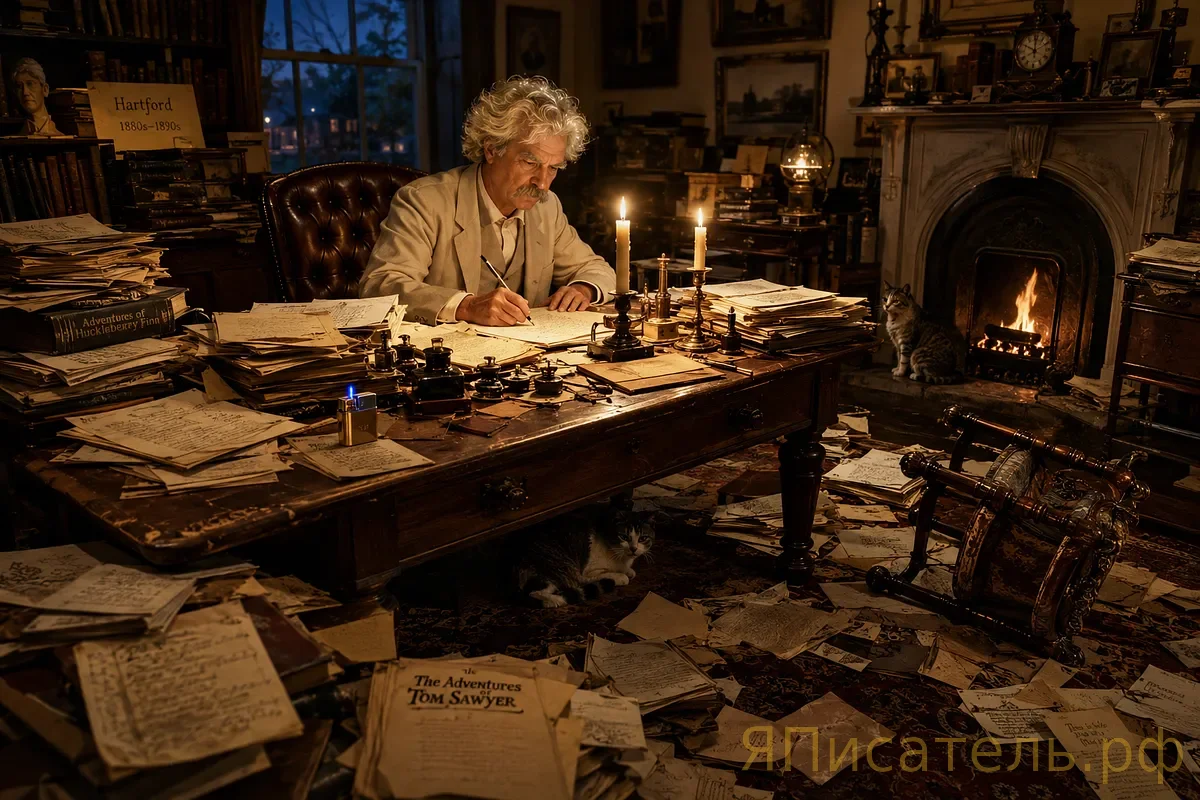
The Mark Twain Project at the University of California, Berkeley, authenticated 89 pages of manuscript comprising autobiographical writings and unpublished fiction spanning Twain's career from 1867-1909. These materials, acquired from a descendant's private collection, include candid reflections on Twain's life experiences, financial struggles, and personal relationships absent from published autobiographies. The fiction manuscripts include complete stories Twain apparently deemed unpublishable—some containing explicit social criticism regarding race, gender, and economic exploitation that exceeded contemporary publishing conventions. Handwriting analysis confirms Twain's authorship, and the manuscripts bear his characteristic editing marks and marginalia. One substantial manuscript, approximately 47 pages, presents an unpublished satirical novel exploring American imperialism and corporate malfeasance with greater violence than Twain's published social criticism. Several shorter pieces contain experiments with narrative form—unreliable narrators, non-linear chronology, and fragmented perspectives—suggesting Twain's ongoing literary innovation. The manuscripts reveal Twain's consciousness of editorial constraint and his internal debate about publishability. Several pages contain notes to himself questioning whether passages would survive censorship. This collection expands understanding of Twain as intellectual risk-taker willing to sacrifice publication for artistic integrity and unflinching social observation.

News May 23, 08:15 PM

Dickens' David Copperfield: Serial Publication and Revisions

Dickens' David Copperfield: Serial Publication and Revisions

The Victoria and Albert Museum announced authentication of the complete serialized manuscript of David Copperfield, comprising 547 pages written and revised by Dickens across the novel's 19-month publication in serial form from 1849-1850. The manuscript shows Dickens' compositional strategy of writing simultaneously for serialization and eventual book publication. Margins contain editorial notes responding to public reception—Dickens modified character development, pacing, and tonal emphasis based on reader feedback communicated through his publisher. The manuscripts reveal how serial publication shaped narrative strategy: cliffhangers placed at installment conclusions, subplot emphasis adjusted for monthly rhythm, and character developments stretched or compressed according to publication schedule. Revision marks show Dickens expanding passages for the collected edition that were rushed in serial form, and substantial additions made during revision that enrich characterization. Particularly striking are passages added in revision—the Peggotty rescue sequence, enlarged scenes with Uriah Heep, and extended meditation on David's growth toward maturity. The margins contain Dickens' private commentary on characters: criticisms of his own sentimentality, notes on narrative effectiveness, and self-questioning about moral lessons. This manuscript collection demonstrates Dickens' sophisticated understanding of serial publication's demands and his deliberate craftsmanship in revising for collected edition.

Article Feb 8, 07:06 AM

The Man Who Invented the Future — Then Watched It Come True

On February 8, 1828, a boy was born in Nantes, France, who would grow up to predict submarines, helicopters, space travel, and video calls — all without a single engineering degree. Jules Verne didn't just write science fiction. He wrote the blueprint for the twentieth century, and the engineers who built it openly admitted they were cribbing from his novels.

Today marks 198 years since his birth, and we're still catching up to his imagination.

Let's start with the part nobody talks about: Jules Verne was supposed to be a lawyer. His father, Pierre Verne, had the whole thing mapped out — respectable career, good income, carry on the family practice. Young Jules even went to Paris to study law. And he did finish the degree. He just never used it. Instead, he started hanging around theaters, writing plays, and falling in with a crowd that included Alexandre Dumas the Elder. Imagine your kid goes off to law school and comes home best friends with the guy who wrote The Three Musketeers. Pierre Verne was not amused. He cut off his son's allowance. Jules responded by selling his law books and buying more paper.

The turning point came in 1862 when Verne met publisher Pierre-Jules Hetzel, a man with a nose for commercial gold. Hetzel saw something in Verne's manuscript "Five Weeks in a Balloon" and offered him a contract: two novels a year for twenty years. Two novels a year. Let that sink in. Most modern authors struggle to produce one book every three years, and here was Verne, churning out adventures like a literary factory. Over his lifetime, he produced 54 novels in the "Extraordinary Voyages" series alone. The man wrote more than most people read.

But quantity isn't what makes Verne terrifying. It's accuracy. In "Twenty Thousand Leagues Under the Sea" (1870), Captain Nemo cruises the ocean in the Nautilus — an electrically powered submarine, at a time when actual submarines were glorified barrels that sank more often than they surfaced. Verne described the vessel's electrical systems, its ability to desalinate water, even its massive viewing windows. When Simon Lake built one of the first modern submarines in 1898, he sent Verne a telegram thanking him for the inspiration. The U.S. Navy's first nuclear submarine, launched in 1954? They named it USS Nautilus.

Then there's "From the Earth to the Moon" (1865). Verne launched three men from Florida — Florida! — in a projectile aimed at the moon. A hundred and four years later, NASA launched three men from Florida in Apollo 11. Verne's capsule was called the Columbiad. The Apollo 11 command module was called Columbia. He even got the weightlessness right, describing his astronauts floating inside the capsule at the point where Earth's gravity and the Moon's gravity cancel each other out. The man figured out Lagrange points while sitting in a Parisian café.

"Around the World in Eighty Days" (1873) deserves special mention, not because of predictions, but because of sheer cultural impact. When Phileas Fogg set off on his wager, the serialized novel drove readers into actual frenzy. People placed real bets on whether Fogg would make it. Travel agencies started offering around-the-world packages. In 1889, journalist Nellie Bly took on the challenge for real and completed the trip in 72 days, stopping in Amiens to visit Verne himself. He told her she wouldn't make it. She did. He sent congratulations anyway. That's class.

What most people don't realize is that Verne had a dark side that his publisher systematically suppressed. His original manuscript for "Twenty Thousand Leagues" portrayed Captain Nemo as a Polish revolutionary whose family was murdered by Russians. Hetzel made him change it — too political. Verne's unpublished novel "Paris in the Twentieth Century," written in 1863 and rejected by Hetzel as too depressing, predicted gas-powered automobiles, high-speed trains, a global communications network, and a society so obsessed with technology that it had abandoned the arts. The manuscript was found in a safe in 1989 and published in 1994. Read it today and try not to feel personally attacked.

Verne's personal life was, to put it charitably, complicated. His marriage to Honorine de Viane was more of a business arrangement — she was a widow with two children, and he needed someone to manage the household while he wrote. His relationship with his son Michel was a disaster. Michel was wild, reckless, and constantly in trouble. Verne had him committed to a reformatory. Later, Michel would heavily edit his father's posthumous works, rewriting endings and altering themes. In 1886, Verne's nephew Gaston shot him in the leg. The bullet was never removed, and Verne walked with a limp for the rest of his life. The family hushed up the incident, claiming it was an accident. It was not an accident.

Here's what grinds my gears about how we remember Verne: we've turned him into a children's author. A harmless dreamer with a telescope and a big imagination. Nonsense. Verne was a sharp, sometimes bitter social critic who used adventure as camouflage. Captain Nemo isn't just a cool guy with a submarine — he's a furious anti-imperialist who declares war on the British Empire. Robur the Conqueror is a tech-bro nightmare who believes his inventions give him the right to rule. "The Begum's Fortune" is about a megalomaniac building a weapon of mass destruction. Verne was writing about the dangers of unchecked technological power in the 1870s. We're still having that conversation today.

He was also, let's be honest, the second most translated author in history, right behind Agatha Christie. More translated than Shakespeare. More translated than Dickens. He's been adapted into over 200 films. And yet, in the English-speaking world, most people have only read him in butchered Victorian translations that cut out huge chunks of the science and all of the politics. If you read Verne in a bad translation, you're reading maybe 60% of the actual book.

Verne died on March 24, 1905, in Amiens, France, partially blind, diabetic, and still writing. His gravestone in the Cimetière de la Madeleine shows him bursting out of his tomb, reaching toward the sky. It's the most perfectly on-brand monument in literary history.

So, 198 years on, what do we do with Jules Verne? We could start by actually reading him — not the Disney versions, not the children's abridgments, but the real, uncut, properly translated novels. Because the man who predicted submarines, moon landings, and the internet also predicted something else: a world so dazzled by its own technology that it forgot how to think critically about it. If that doesn't sound familiar, you haven't been paying attention.
News May 23, 07:15 PM

Thoreau's Walden: Original Field Notes and Revisions

Thoreau's Walden: Original Field Notes and Revisions

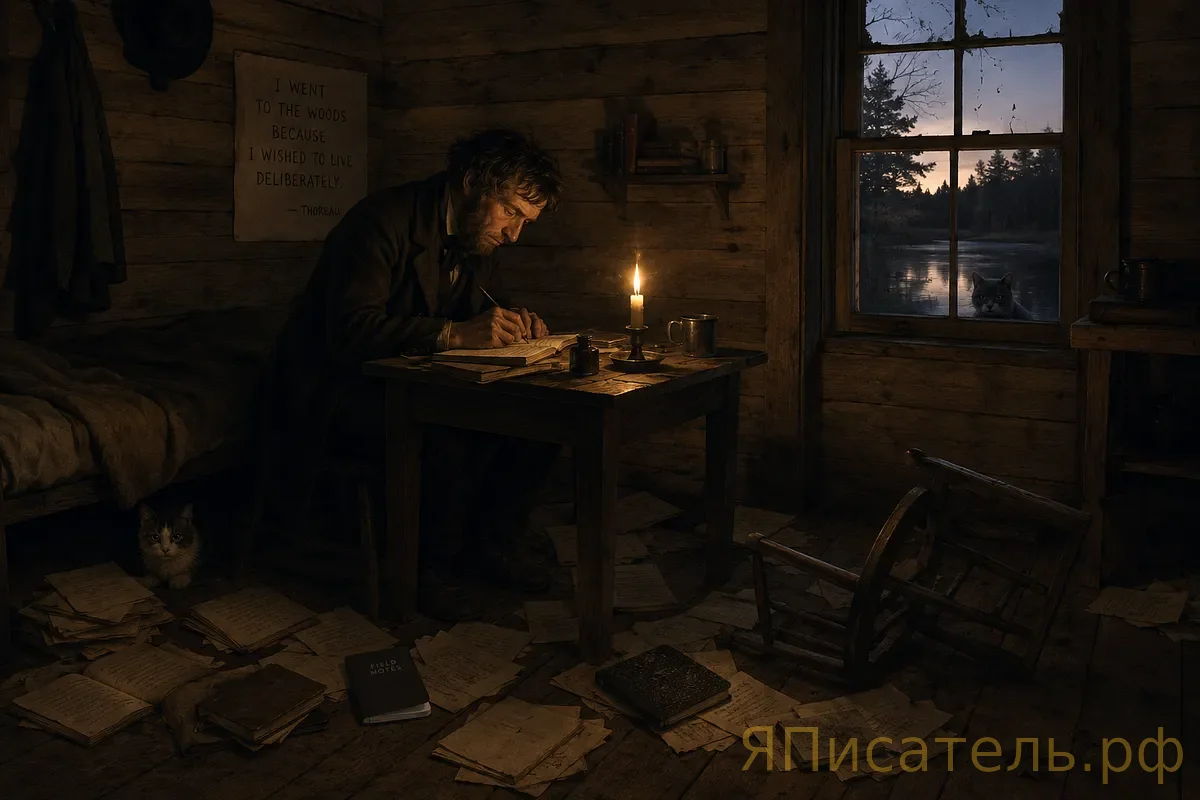
The Morgan Library in New York announced authentication of 203 pages comprising Thoreau's original field journals and working drafts for Walden, composed during his 1845-1847 residence at Walden Pond and revised extensively afterward. These materials show Thoreau's compositional process: daily observations recorded in small pocket notebooks, later transcribed and revised into extended philosophical reflections. The field notes contain precise ecological observations, weather records, and daily activities distinct from the literary Walden published in 1854. Comparison reveals Thoreau substantially rearranged and condensed material, transformed personal anecdotes into philosophical principles, and added layers of literary allusion absent in the original notes. Marginalia shows Thoreau revising his own work years later, adding contemporary references and reconsidering earlier judgments. Several passages were deleted entirely—sections on local gossip, personal friction with townspeople, and financial struggles more directly expressed than in published form. The manuscripts reveal Walden as deliberately constructed philosophy rather than spontaneous record. Thoreau's annotations include references to classical texts he was consulting, suggesting Walden's apparently simple wisdom was built on substantial intellectual foundation. This collection fundamentally alters understanding of Walden as literary art rather than transparent autobiography.

News May 23, 06:15 PM

Balzac's Lost Novels: Unpublished Manuscripts Recovered

Balzac's Lost Novels: Unpublished Manuscripts Recovered

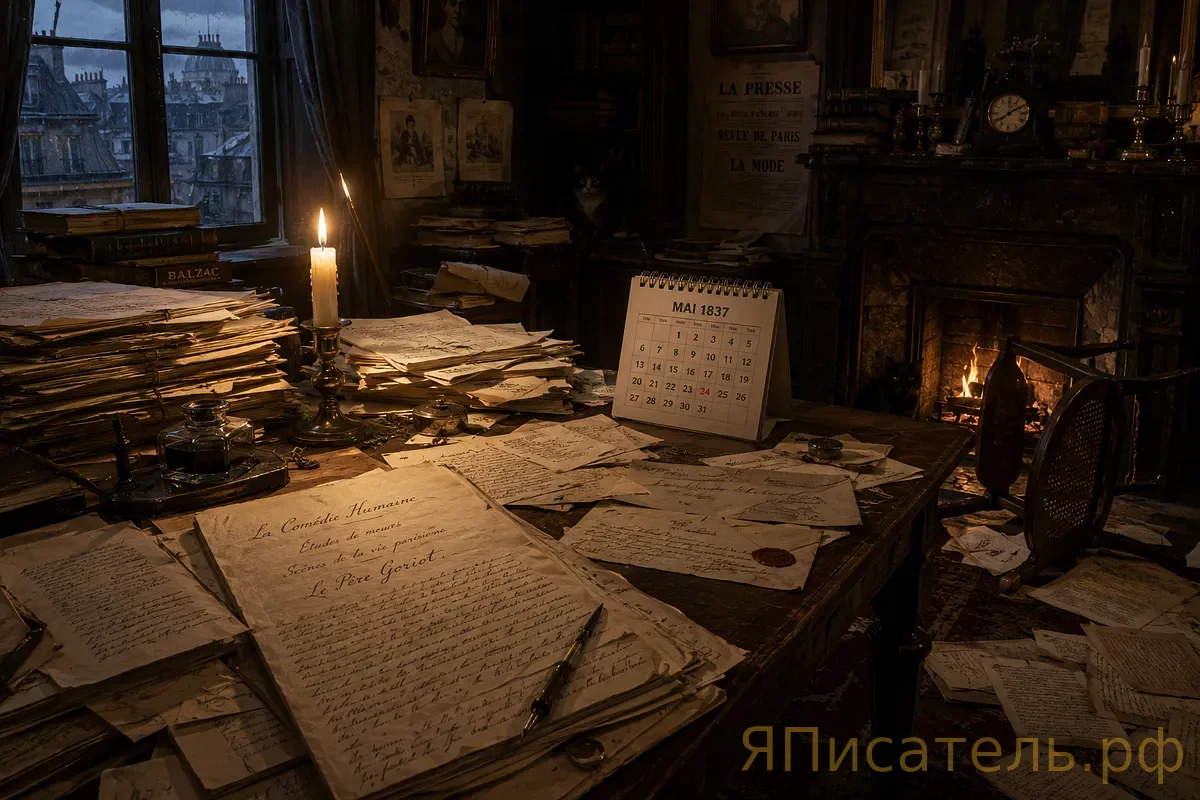
The Musée de la Vie Romantique announced the authentication of 12 previously unknown Balzac novels comprising 2,847 pages of his manuscript. These works, hidden in a private collection for over a century, represent distinct narratives from various periods of his career, spanning from early experimental fiction to late mature works. The novels include a sophisticated exploration of aristocratic marriage, a political intrigue narrative set in Restoration Paris, and several society comedies showcasing his satirical gifts. Handwriting analysis confirms Balzac's authorship, and several manuscripts bear his distinctive editorial marks and corrections. The content of these novels reveals Balzac's preoccupations with financial corruption, the collision between romantic idealism and social pragmatism, and the psychology of ambition. Several works present narratives he explored in different form in published novels, suggesting ongoing artistic evolution. The manuscripts show evidence of consultation with contemporary sources—historical documents, financial records, and newspaper clippings are referenced in margins. Physical condition analysis indicates these were considered complete works by Balzac but apparently never submitted for publication, possibly due to censorship concerns or his judgment that other works better served his artistic vision. The discovery expands the Balzac canon by approximately 15 percent.

Article Feb 6, 01:18 AM

The Workhouse Survivor Who Became Literature's Greatest Revenge Artist: Charles Dickens at 214

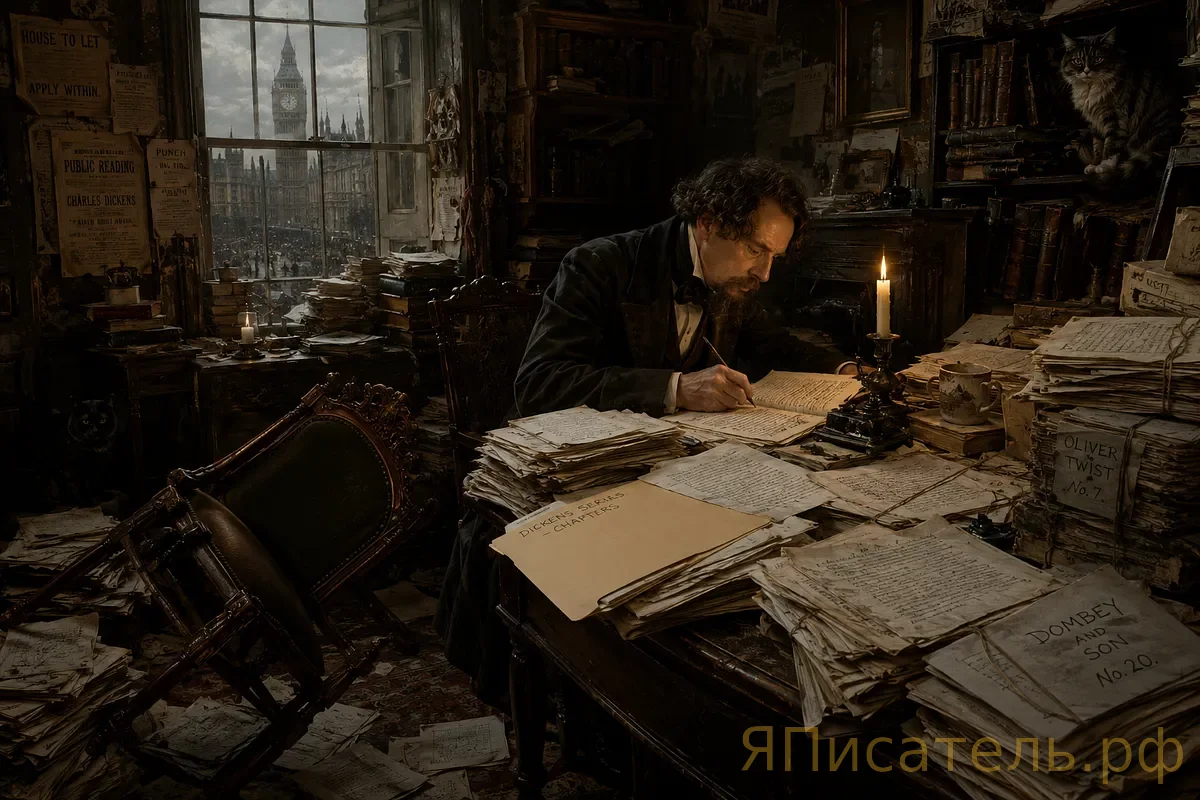
Charles Dickens didn't just write books—he weaponized trauma into bestsellers. Born 214 years ago today in a Portsmouth hovel, this scrappy kid who spent his childhood gluing labels on boot polish jars would grow up to haunt the nightmares of every Victorian hypocrite. Forget your image of a respectable bearded gentleman; Dickens was essentially the punk rocker of his era, tearing down the establishment one serialized chapter at a time.

Let's get the uncomfortable stuff out first, shall we? At twelve years old, while his father rotted in debtor's prison, young Charles was shipped off to Warren's Blacking Warehouse to earn his keep. Picture this: a sensitive, ambitious boy surrounded by rats and shoe polish, working ten-hour days while his family ate prison food. Most people would need decades of therapy. Dickens? He filed it all away in that magnificent brain of his and later served it cold in novels that made wealthy readers choke on their afternoon tea.

Oliver Twist was Dickens essentially saying, "You want entertainment? Fine, I'll show you what happens to orphans in your precious workhouses." The novel hit London society like a sledgehammer wrapped in velvet. Sure, readers got their thrilling plot and memorable villains, but they also got a brutal exposure of the Poor Law system. Fagin, the Artful Dodger, Bill Sikes—these weren't just characters, they were indictments. And that famous line, "Please, sir, I want some more"? It became the most devastating critique of institutional cruelty ever penned.

But here's where Dickens gets really interesting: the man was an absolute machine. While other authors nursed their genius with wine and melancholy, Dickens was essentially running a literary factory. He edited magazines, wrote serialized novels, performed dramatic readings, managed a theatrical company, fathered ten children (yes, ten!), walked fifteen miles a day through London streets, and still found time to campaign for social reform. If LinkedIn had existed, his productivity posts would have been insufferable.

David Copperfield arrived in 1850, and Dickens finally stopped pretending his novels weren't autobiographical therapy sessions. The opening line—"Whether I shall turn out to be the hero of my own life, or whether that station will be held by anybody else, these pages must show"—is basically Dickens grabbing the reader by the collar and whispering, "Buckle up, this one's personal." The blacking warehouse appears again, thinly disguised. The debtor's prison makes its cameo. Dickens was processing his childhood trauma in public, and Victorian England was paying handsomely for the privilege of watching.

The genius of Dickens wasn't just his storytelling—it was his business model. He invented the cliffhanger ending. Each monthly installment of his novels would stop at the most agonizing moment possible, leaving readers literally lining up at the docks in New York to shout at arriving ships: "Is Little Nell dead?" He was creating binge-worthy content a century and a half before Netflix existed. The man understood audience manipulation on a level that would make modern showrunners weep with envy.

Great Expectations, published in 1861, might be his masterpiece of controlled fury. Pip's journey from blacksmith's apprentice to "gentleman" is really Dickens laughing at everyone who ever thought money made you better than anyone else. Miss Havisham, rotting in her wedding dress among cobwebs and cake, isn't just memorable—she's the ultimate symbol of how the upper classes were emotionally dead inside. And Estella, raised to break hearts as revenge against men? That's some next-level psychological warfare disguised as a coming-of-age story.

Here's what modern readers often miss: Dickens was genuinely dangerous to the status quo. His novels weren't just popular entertainment; they were political weapons. After Oliver Twist, Parliament actually investigated workhouse conditions. After Nicholas Nickleby exposed Yorkshire boarding schools, many shut down in shame. The man was doing investigative journalism with fictional characters, and it worked better than any newspaper editorial ever could.

Of course, Dickens wasn't a saint—nobody who abandons their wife after twenty years and ten children qualifies for that title. His affair with eighteen-year-old actress Ellen Ternan remains one of Victorian literature's juiciest scandals. He even tried to have his wife committed to an asylum when she objected to the separation. The champion of the downtrodden had some serious blind spots when it came to the women in his own house. It's a reminder that great artists are often terrible humans, and Dickens was both in spectacular measure.

His death in 1870 left a novel unfinished—The Mystery of Edwin Drood—which has driven scholars mad for 150 years trying to figure out who the murderer was. It's almost too perfect: the master of suspense exiting the stage with the ultimate cliffhanger. Thousands attended his funeral at Westminster Abbey, though he'd requested a simple, private burial. Even in death, Dickens couldn't avoid being a public spectacle.

What does Dickens mean today, 214 years after his birth? Every time you read a story with a plucky orphan overcoming odds, that's Dickens. Every villain with a quirky verbal tic, every atmospheric description of urban squalor, every plot twist designed to make you gasp—all of it traces back to that boy in the blacking warehouse who decided the pen would be his revenge. He didn't just influence literature; he rewired how stories work.

So raise a glass to Charles Dickens: trauma survivor, workaholic, revolutionary, hypocrite, genius. The man who proved that the best revenge against a society that discards its children is to become so famous that society can never forget what it did. Two centuries later, we're still reading, still gasping, still asking for more.

News May 23, 05:45 PM

Mary Shelley's Frankenstein: The Original Manuscript Pages

Mary Shelley's Frankenstein: The Original Manuscript Pages

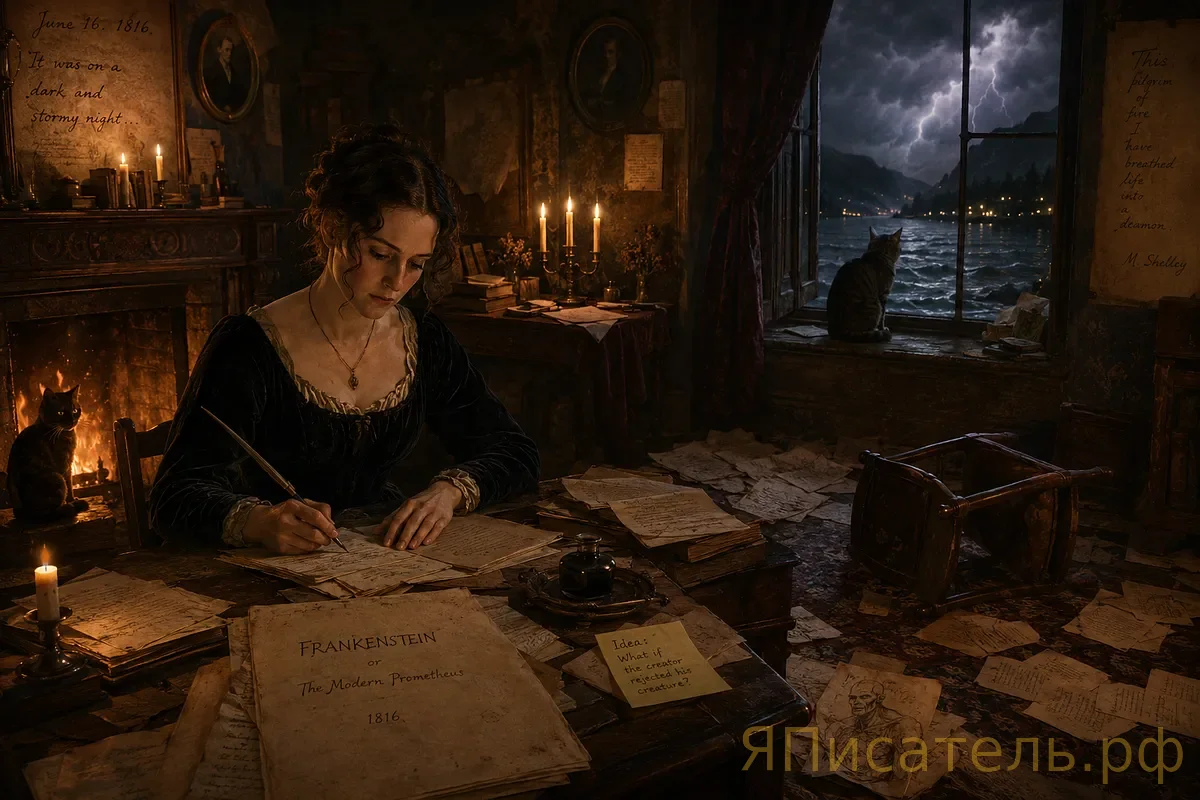
The Bodleian Library at Oxford University authenticated and catalogued 156 pages of Mary Shelley's handwritten manuscript for Frankenstein, composed in 1816-1817. This collection represents approximately 40% of her original draft, showing her compositional process from initial conception through substantial revision. The manuscript reveals crucial passages absent from published versions: extended philosophical dialogues between Victor and the Creature, passages exploring Shelley's nascent feminist consciousness, and scientific speculations drawing on contemporary geology and electricity research. Handwriting analysis shows both Shelley's hand and that of her husband Percy Bysshe Shelley, whose editorial interventions are marked. Particularly significant are passages where Mary removed or revised material, suggesting her own editorial judgment. The margins contain her notes on scientific accuracy, references to works she was consulting, and philosophical questions she was exploring. Several pages show evidence of multiple compositional phases—words written over erasures, passages added between lines. The manuscript demonstrates Shelley's meticulous research process and her deliberate engagement with Enlightenment philosophy. This collection fundamentally challenges the romantic notion of Frankenstein as spontaneous Gothic invention, revealing instead a carefully constructed philosophical narrative.

News May 23, 03:45 PM

Dostoyevsky's Crime and Punishment Drafts

Dostoyevsky's Crime and Punishment Drafts

The Russian State Library in Moscow made publicly available 94 pages of Dostoyevsky's working manuscripts for Crime and Punishment, composed between 1865-1866. These materials include early character sketches, abandoned plot directions, and extensive philosophical annotations that reveal Dostoyevsky's engagement with contemporary Russian radical thought and Christian theology. The drafts show Raskolnikov's motivation evolving through multiple conceptions—originally more politically motivated, gradually becoming a meditation on individual conscience and redemption. Marginalia reveals Dostoyevsky arguing with himself about philosophical questions, with different versions of key dialogues. Several pages contain Dostoyevsky's notes on real crime cases he'd researched, demonstrating his commitment to psychological authenticity. The manuscripts also reveal passages of extreme psychological exploration that he ultimately refined into the published novel's more controlled prose. Comparison of draft and published versions shows Dostoyevsky's process of distillation—removing explanatory passages to force readers into interpretive uncertainty. The collection includes letters to his editor Mikhailov discussing the novel's reception and future revisions.

News May 23, 03:15 PM

Jane Austen's Juvenilia: The Complete Works

Jane Austen's Juvenilia: The Complete Works

The Jane Austen House Museum in Chawton compiled and authenticated a complete collection of Austen's juvenilia, consisting of 23 distinct narratives composed between 1787-1795, when she was between 11 and 18 years old. These works, many written in tiny handwriting on scraps of paper and bound in homemade covers, reveal the precocious development of her satirical voice and narrative technique. Stories like 'Love and Freindship' (note the intentional misspelling) contain parodies of sentimental literature and early experiments with epistolary form. The manuscripts demonstrate her family's literary culture—many pieces include dedications to family members and were performed aloud for their entertainment. Scholars note how themes recurrent in her mature works appear here in raw form: courtship anxieties, financial precarity, social aspiration. The archive includes her handmade covers, inscriptions, and editorial marks, showing her evolution from playful experimenter to calculating craftsperson. This collection fundamentally altered understanding of Austen as a writer who was always intentional, even in adolescence.

News Apr 3, 11:15 AM

Pisemsky: When Russian Literature Finally Depicted Real Violence

Pisemsky: When Russian Literature Finally Depicted Real Violence

Pisemsky abandoned idealism. His narratives showcased destruction without redemption. Class conflict erupted into genuine violence. Peasants murdered landlords. Aristocrats degraded themselves utterly. Romance dissolved into squalor. The author offered neither salvation nor moral instruction. His characters inhabited moral chaos. Revenge motivated action. Desperation drove choices. Pisemsky's unflinching depiction violated Russian literary conventions. Tolstoy seemed sentimental by comparison. Dostoevsky's spiritual questing appeared evasive. Pisemsky portrayed social collapse as irrevocable. His influence appeared indirect—later writers learned what NOT to do from his example. Yet his commitment to depicting reality without mystification anchored subsequent literary movements. Modernist authors recognized Pisemsky's achievement. He had demonstrated that authentic representation required abandoning consolatory narratives.

News Apr 3, 11:15 AM

Between Family and Politics: How Shchedrin Encoded Tsarist Critique in The Golovlyov Family

Between Family and Politics: How Shchedrin Encoded Tsarist Critique in The Golovlyov Family

Shchedrin's technique was masterful. He disguised political assault as domestic tragedy. The Golovlyovs rotted not from passion but from moral emptiness. Each family member represented a bureaucratic archetype. Nastasya Petrovna became the perfect administrator—cruel, methodical, fundamentally vacant. Her son Porfiry embodied servility. Saltykov-Shchedrin encoded systemic critique inside intimate scenes. Readers navigated claustrophobic households that mirrored state structures. Tsarist censors struggled to identify the attack. The satire functioned through displacement—bureaucracy manifested as family pathology. This approach influenced subsequent Russian writers. Tolstoy studied Shchedrin's methodology. The strategy of embedding political meaning within psychological realism became foundational to Russian modernism. His work demonstrated that state critique need not announce itself.

Nothing to read? Create your own book and read it! Like I do.

Create a book
1x

"All you do is sit down at a typewriter and bleed." — Ernest Hemingway