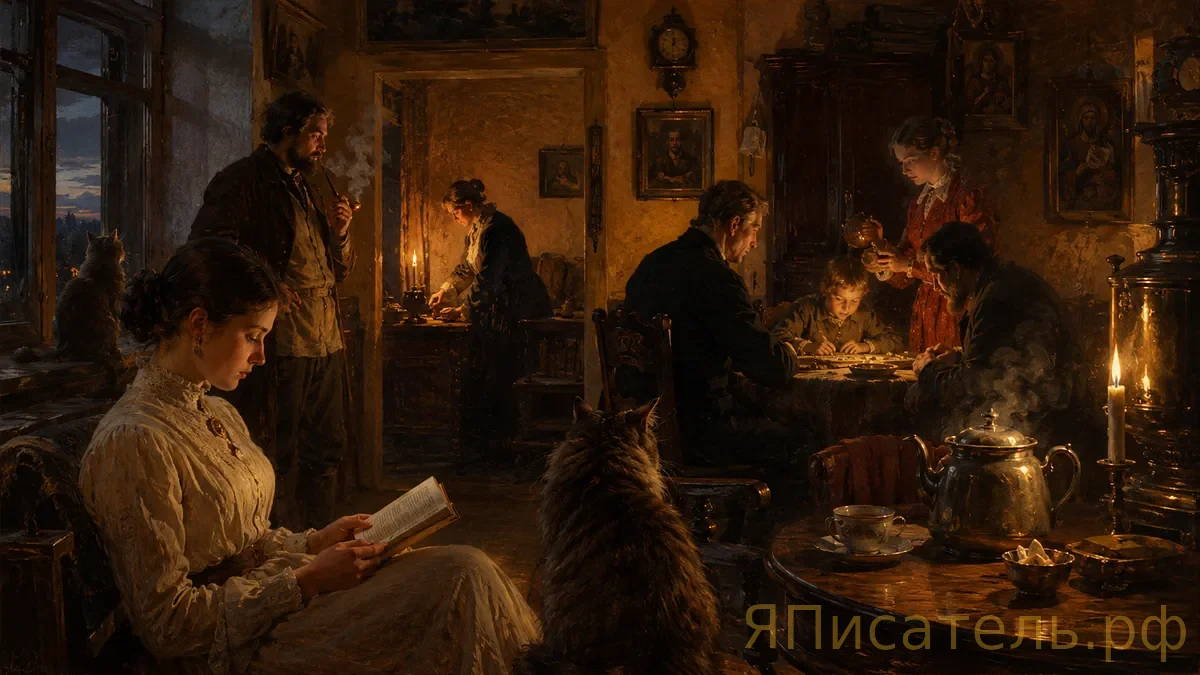
Secondary Characters and Relationships
Learn how Russian writers develop supporting characters as full human beings rather than plot functions. Secondary characters enrich narrative, provide perspective, and embody alternative thematic positions.
Secondary characters in Russian literature function as much more than supporting players; they embody alternative philosophies, represent different life choices, and provide crucial perspective on protagonists. Russian writers gave secondary characters their own complexities, contradictions, and moral ambiguity. A mentor figure in Russian prose rarely dispenses wisdom without cost; benefactors harbor selfish motives; villains possess understandable motivations and moments of humanity. Effective secondary character development involves showing relationships dynamically: how characters interact reveals both participants. A protagonist's treatment of secondary characters indicates moral standing; a character capable of dismissing servants or subordinates as mere obstacles reveals internal emptiness despite other virtues. Russian prose often employed secondary characters as thematic counterpoints: the spiritual believer contrasted with the rationalist, the idealist with the pragmatist, the passionate with the controlled. These relationships explore thematic questions through interpersonal dynamics. Secondary characters also provide emotional anchors for readers: they offer perspectives outside protagonist consciousness, create moments of tenderness or humor that balance heavier material, and serve as witnesses to protagonist transformation. Developing secondary characters requires the same attention to motive, psychology, and complexity given to protagonists—they exist as complete humans rather than functions within someone else's story.
Вставьте этот код в HTML вашего сайта для встраивания контента.