Content Feed

Discover interesting content about books and writing

Joke Jan 20, 10:00 AM

The Unreliable Narrator's Job Interview

An unreliable narrator applies for a job as a court stenographer. The judge asks: 'Can you provide an accurate transcript of proceedings?' The narrator replies: 'Absolutely. Though I should mention that what I just said may or may not have happened, the judge might actually be a flamingo, and this interview could be taking place in 1847. But yes, completely accurate.'

Joke Jan 20, 07:31 AM

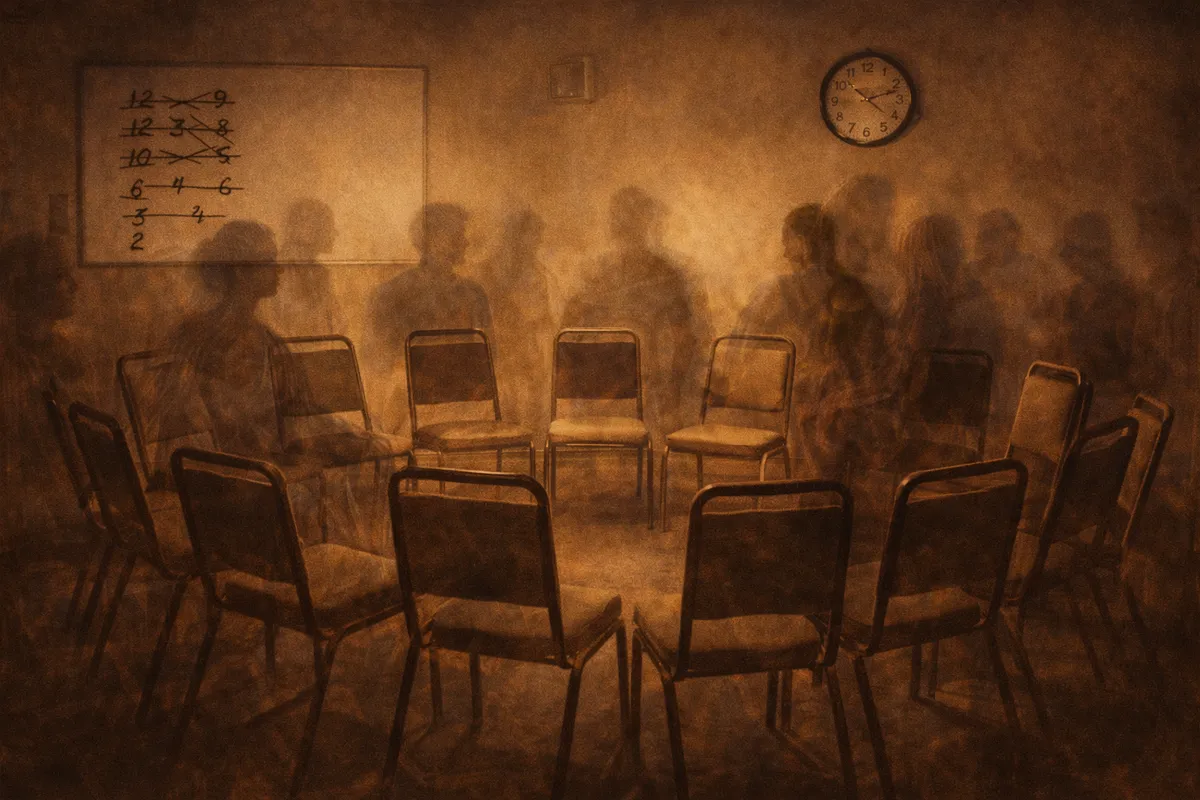
The Unreliable Narrator Support Group

The Unreliable Narrator Support Group

There's a support group for unreliable narrators. They meet every Tuesday. Or Wednesday. Actually, it might be monthly. The facilitator claims twelve people attend regularly, though some members insist there are only three. Last week they discussed trust issues, but according to the minutes—which may or may not exist—they spent the entire session arguing about whether the meeting had actually happened at all.

News May 9, 08:34 AM

Virginia Woolf's Mrs. Dalloway: Stream of Consciousness Innovation

The Virginia Woolf Archive at the University of Sussex contains extensive manuscripts for 'Mrs. Dalloway,' including preliminary notes, multiple draft versions, and revision pages that document the novel's development. Early drafts reveal that Woolf conceived the novel very differently than its published form—initial sketches show a broader scope encompassing more characters and extended temporal range before Woolf deliberately constrained the narrative to a single day in June 1923. Manuscript pages show Woolf experimenting with narrative perspective, trying different approaches to representing consciousness before developing the distinctive technique of free indirect discourse that characterizes the novel. Woolf's revisions focused heavily on deepening interiority and developing the novel's stream-of-consciousness passages, with handwritten additions in margins and between lines showing her constant refinement of psychological accuracy. The archives preserve Woolf's notes on influences from contemporary psychology and philosophy, demonstrating that her narrative innovations were theoretically grounded in intellectual engagement with new understandings of consciousness and perception. Annotations in Woolf's personal copies of draft pages reveal her self-critical assessment of which passages achieved her intended effects and which required further revision. Letters to her publisher reveal Woolf's anxiety about the novel's experimental form and her defensiveness about its commercial prospects, showing her awareness that she was pushing against conventions of readable narrative. Scholars examining the manuscripts have traced how specific scenes evolved through multiple complete rewrites, with Woolf fundamentally altering characterization and emotional impact through revision.

Tip May 9, 04:31 AM

Show, Don't Tell - The Foundation of Vivid Storytelling

Transform abstract descriptions into concrete sensory experiences. Instead of stating emotions or qualities, reveal them through actions, dialogue, and specific details that allow readers to experience the narrative directly.

Show, don't tell is the cornerstone of effective writing that separates amateur prose from published work. Rather than explicitly stating that a character is angry, let readers see the anger through clenched fists, sharp dialogue, and tense shoulders. This technique engages readers' imaginations and creates emotional resonance. When you write "She was frightened," you bypass the reader's experience. Instead, "Her breath came in shallow gasps, and she gripped the armrest until her knuckles whitened" allows readers to feel her fear viscerally. Russian literature masters this principle brilliantly—Tolstoy doesn't tell us Anna Karenina is conflicted; we experience her internal turmoil through her physical sensations and fragmented thoughts. By showing rather than telling, you transform passive readers into active participants who construct meaning from details. This technique applies across all genres and writing styles. It requires trust in your reader's intelligence and the power of carefully chosen details over explicit explanation. The more specific and concrete your descriptions, the more powerfully they convey meaning without authorial intrusion.

Nothing to read? Create your own book and read it! Like I do.

Create a book
1x

"You write in order to change the world." — James Baldwin