Content Feed

Discover interesting content about books and writing

Joke Jan 30, 04:02 PM

The Literal Red Herring

Editor's note: "Your red herring in chapter 9 is too obvious."

I didn't write a red herring in chapter 9.

I wrote an actual herring. Red scales. Swims. The detective was hungry. He ate it.

Now the mystery has no clues and the detective has lunch.

Editor: "Still too obvious."

I give up.

Joke Jan 24, 01:01 PM

The Plot Twist's Identity Crisis

A plot twist walked into a bar and sat next to a red herring. 'Nobody ever sees me coming,' the plot twist complained. The red herring sighed, 'At least you matter in the end. I spend three hundred pages being suspicious, and for what? So readers can feel clever when they realize I was irrelevant all along.' The bartender, a deus ex machina, suddenly appeared. 'You think that's bad? I only show up when the author writes themselves into a corner. Last week I was a convenient twin brother. The week before, a sudden inheritance. I have no dignity left.' The plot twist ordered another drink. 'Well, at least we're not the epilogue—existing just to answer questions nobody asked.'

Tip May 9, 11:02 AM

Use Symbolism Subtly to Deepen Meaning

Symbols can carry thematic weight and emotional resonance when they emerge naturally from story details rather than imposed artificially. The most effective symbols function first as literal elements before revealing deeper meaning.

Symbolism is most powerful when readers don't consciously recognize it—when an object, setting, or action carries meaning naturally from the story's context rather than serving as obvious representation of an abstract concept. In Anna Karenina, the railway carries symbolic weight. Trains represent progress, modernity, and the forces that disrupt traditional society. More specifically, trains represent danger and the possibility of catastrophic change. This symbolic weight emerges from how trains function in the narrative—they create specific circumstances and carry thematic implication without ever becoming propaganda for authorial philosophy. Effective symbols work first as literal elements. A door is a door; it functions in the practical world of the story. It only becomes symbolic through how it's used in context. A character might repeatedly attempt to open locked doors, and this literal repetition gradually carries symbolic meaning about barriers and access. A setting might be described with details that accumulate meaning over time—a garden slowly going to seed comes to represent beauty threatened with destruction. The most sophisticated symbolism allows multiple interpretations. Readers might interpret the same symbol differently based on their perspective, and both interpretations might be valid. Avoid heavy-handed symbolism that feels like the author explaining meaning explicitly. The symbol should suggest rather than declare. If you must explain what something symbolizes, the symbol has failed. A symbol that requires authorial explanation becomes mere decoration rather than organic meaning-making. Trust your readers' intelligence. Symbols that emerge naturally from character actions and choices feel more authentic than symbols imported from outside to serve abstract purposes.

Joke Jan 20, 10:00 AM

The Unreliable Narrator's Job Interview

An unreliable narrator applies for a job as a court stenographer. The judge asks: 'Can you provide an accurate transcript of proceedings?' The narrator replies: 'Absolutely. Though I should mention that what I just said may or may not have happened, the judge might actually be a flamingo, and this interview could be taking place in 1847. But yes, completely accurate.'

Joke Jan 20, 07:31 AM

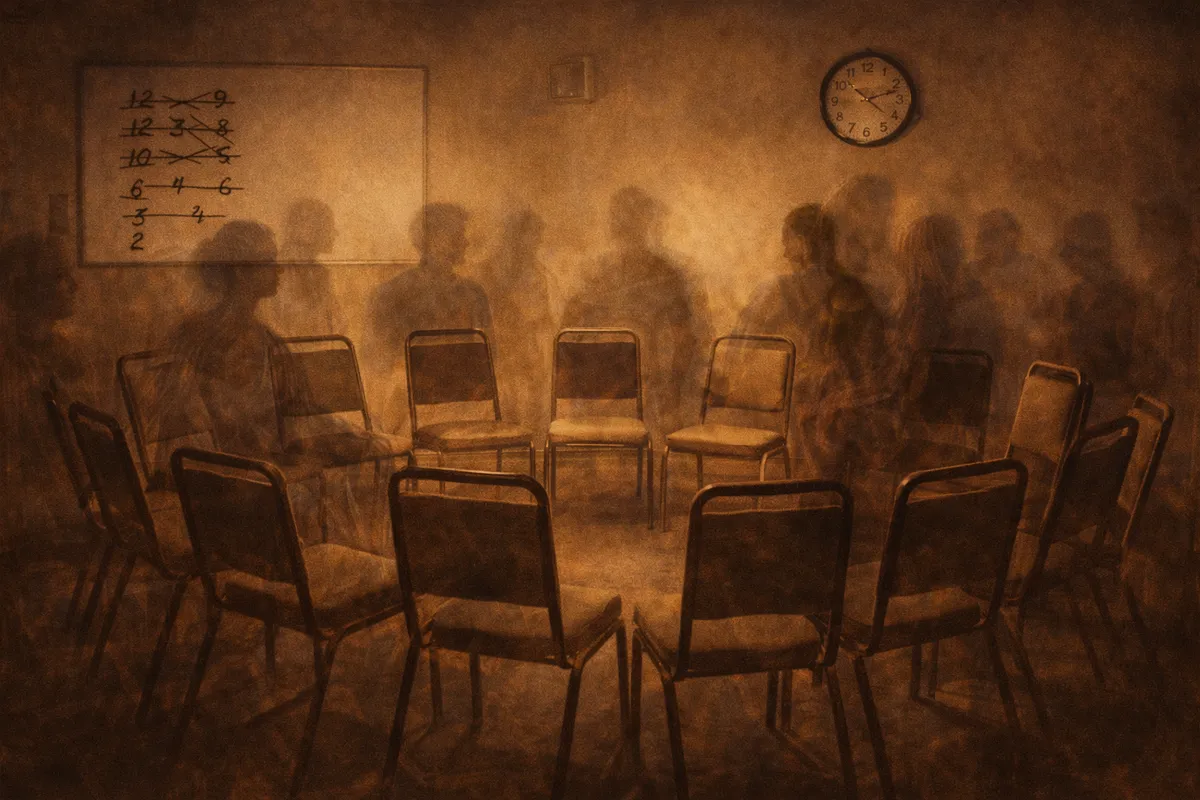
The Unreliable Narrator Support Group

The Unreliable Narrator Support Group

There's a support group for unreliable narrators. They meet every Tuesday. Or Wednesday. Actually, it might be monthly. The facilitator claims twelve people attend regularly, though some members insist there are only three. Last week they discussed trust issues, but according to the minutes—which may or may not exist—they spent the entire session arguing about whether the meeting had actually happened at all.

Nothing to read? Create your own book and read it! Like I do.

Create a book
1x

"A word after a word after a word is power." — Margaret Atwood